Career Development
He consolidated his international academic trajectory through a B.Sc. (Honours) in Biological Sciences, an M.Sc. in Biotechnology with specialization in Plant and Microbial Production, and a Ph.D. in Plant Sciences focused on comparative genomics and genome synteny‑based positional cloning. His career advanced through postdoctoral and senior scientist appointments, service as a patent examiner, and consultancy roles in universities, research institutions, and government agencies across Australia, Europe, South America, and the United States.
Pioneering Scientific Research
Historical Context: Innovation in the Pre‑NGS Era
It is essential to highlight that his pioneering work was conducted during a period of critical technological limitations, contemporary to the Human Genome Project (1990–2003). In the absence of Next Generation Sequencing (NGS) and modern bioinformatic algorithms, his research required:
Exceptional experimental skill: Mastery of complex molecular systems and technologies in the laboratory.
Analytical rigor: Creative and precise interpretation of genomic data in a low‑automation environment.
Pioneering vision: Applying comparative genomics across plant species when genomics knowledge was still in its infancy—demonstrating strategic intelligence that advanced the frontier of human knowledge.
1. Discovery of the NOD Factor Receptor (Nitrogen Fixation)
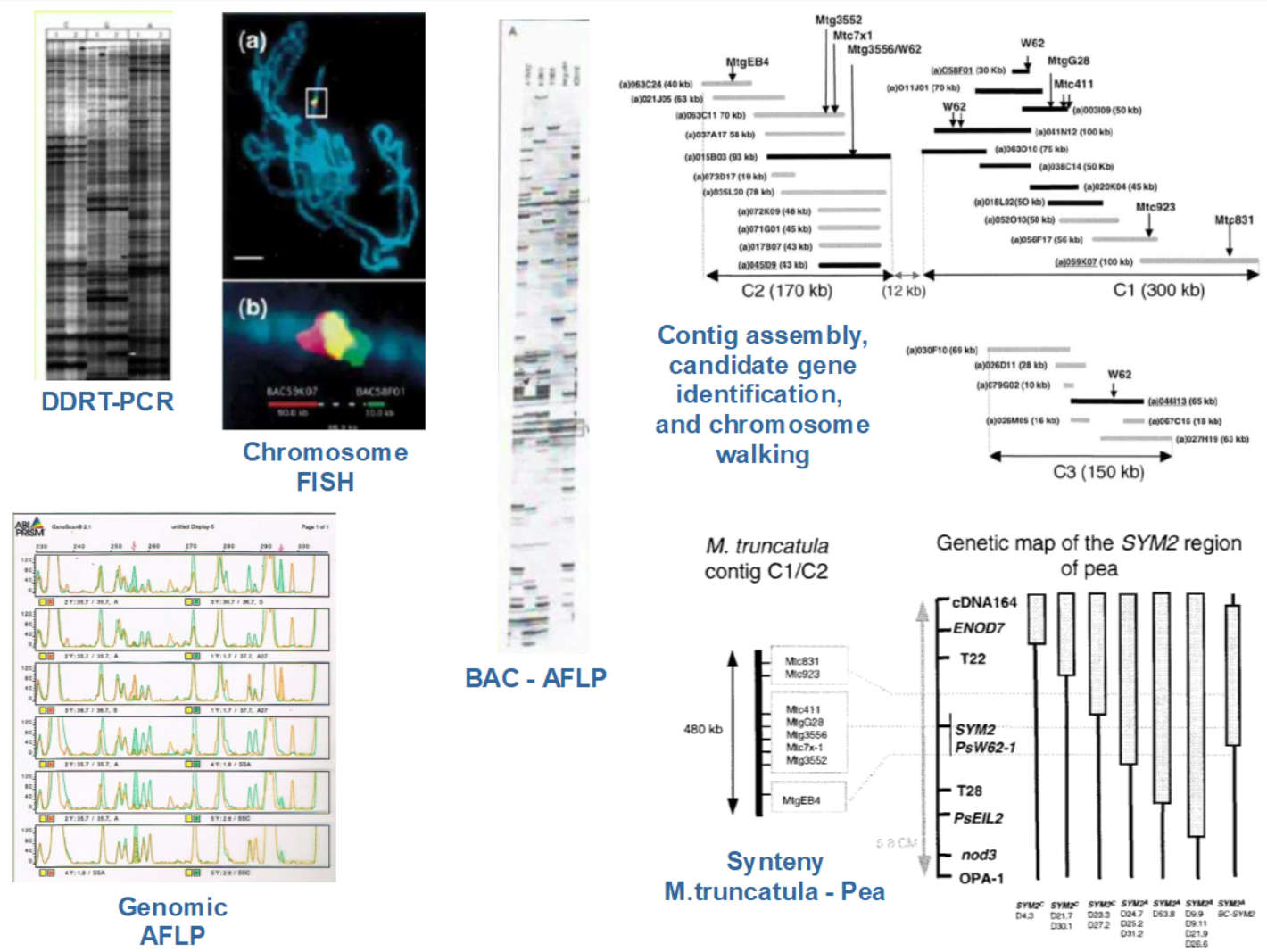
He was a global trailblazer in applying comparative genomics to map based clonig in legumes—an innovative approach for its time. His work provided the essential molecular markers and candidate genes that enabled the identification of the plant Nod Factor receptor of Rhizobium.
Impact:
This discovery was a long awaited milestone for the international scientific community studying the Rhizobium-legume symbiosis. His results laid the foundation for confirming the discovery of LysM receptor protein family (comprising the SYM2 receptor kinases in pea, and LYK3/LYK4 in Medicago truncatula), which bind Nod factors to confer host-specificity in the symbiosis.
Key References:
Gualtieri, G. et al. The evolution of nodulation. Plant Mol Biol 42, 181–194 (2000). https://doi.org/10.1023/A:1006396525292
Gualtieri, G. et al. Microsynteny between pea and Medicago truncatula in the SYM2 region. Plant Mol Biol 50, 225–235 (2002). https://doi.org/10.1023/A:1016085523752
Gualtieri, G. et al. Microsynteny between the Medicago truncatula SYM2-orthologous genomic region and another region located on the same chromosome arm. Theor Appl Genet 105, 771–779 (2002). https://doi.org/10.1007/s00122-002-0949-6
Limpens, E. et al. LysM Domain Receptor Kinases Regulating Rhizobial Nod Factor-Induced Infection. Science 302(5645): 630–633 (2003). https://doi.org/10.1126/science.1090074
2. Identification of Genes Involved in the Apomixes Phenotype
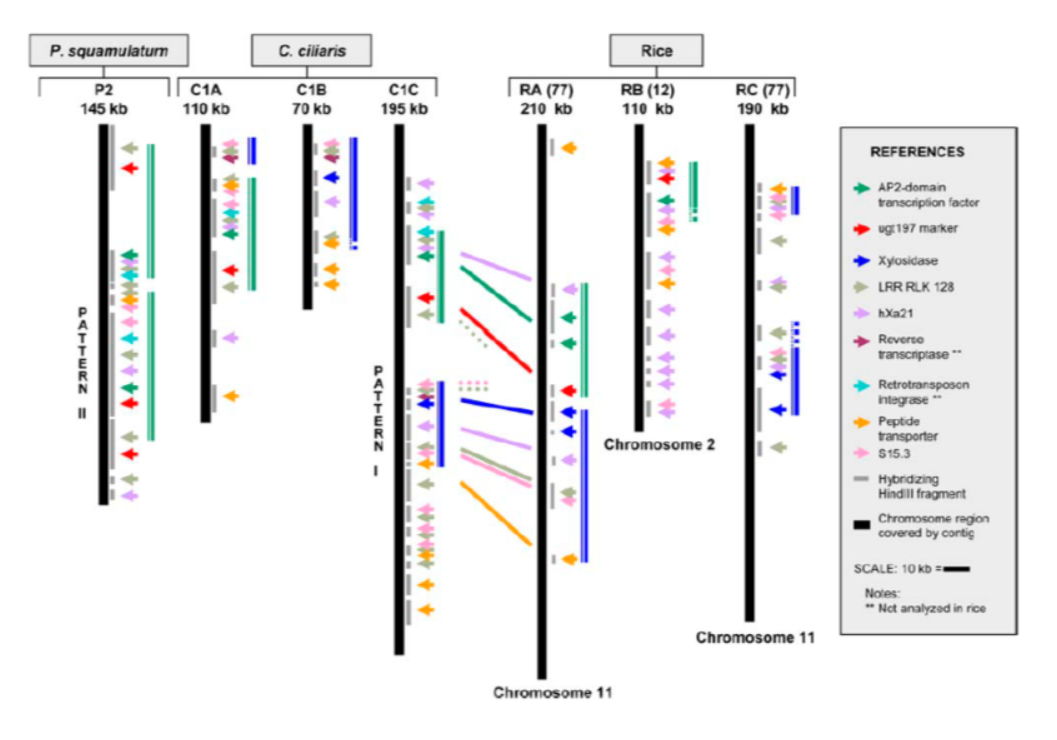
He applied comparative genomics to describe synteny in the ASGR (Apospory Specific Genomic Region) between apomictic plants (Pennisetum squamulatum and Cenchrus ciliaris) and rice as a genomic model – an exceptionally challenging task due to the high complexity and large genome size of both apomictic species.
Innovation:
His work contributed with the identification of BABY BOOM type genes. Subsequent functional validation through transgenesis confirmed that these genes are responsible for the apomictic phenotype—an unprecedented breakthrough for clonal propagation of elite agricultural lines.
Key References:
Gustavo Gualtieri et al. A Segment of the Apospory-Specific Genomic Region Is Highly Microsyntenic Not Only between the Apomicts Pennisetum squamulatum and Buffelgrass, But Also with a Rice Chromosome 11 Centromeric-Proximal Genomic Region. Plant Physiology, Volume 140, Issue 3, Pages 963–971 (2006). https://doi.org/10.1104/pp.105.073809
Shailendra Goel et al. Comparative Physical Mapping of the Apospory-Specific Genomic Region in Two Apomictic Grasses: Pennisetum squamulatum and Cenchrus ciliaris. Genetics, Volume 173, Issue 1, Pages 389–400 (2006). https://doi.org/10.1534/genetics.105.054429
J.A. Conner, et al. A parthenogenesis gene of apomict origin elicits embryo formation from unfertilized eggs in a sexual plant. Proc. Natl. Acad. Sci. U.S.A. 112 (36) 11205-11210 (2015). https://doi.org/10.1073/pnas.1505856112